Leftist Theory
Leftist Theory
https://mszturc.github.io/obsidian-advanced-slides/extend-syntax/
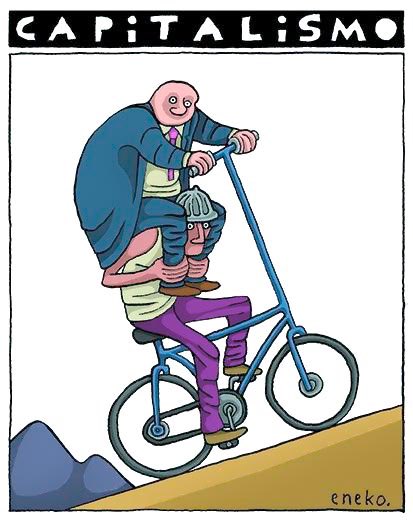
Without revolutionary theory there can be no revolutionary movement.
V. I. Lenin | What is To Be Done (1902)
Engels on the Importance of Theoretical Struggle
We have to build up a completely new society unknown in our history. We have to radically change thousand-year-old customs and habits, ways of thinking, and prejudices. We have to change old relationships in production, abolish the exploiting classes, and establish new relationships without exploitation and oppression. Therefore, we have gradually to turn our country from a backward agricultural country into an industrial one. Step-by-step collectivization of agriculture has to be implemented. Private industry, commerce, and handicrafts must go through socialist transformation. Our ignorant and poverty-ridden country must be turned into one with an advanced culture and a happy and merry life.
Ho Chi Minh on Revolution: Selected Writings 1920-1966
Why Do We Have To Study Theory (1957)
🇻🇳
“This crippling of individuals I consider the worst evil of capitalism. Our whole educational system suffers from this evil. An exaggerated competitive attitude is inculcated into the student, who is trained to worship acquisitive success as a preparation for his future career.”
Albert Einstein | Why Socialism? (1949)
🇺🇸
Definitions.
--
Property
- Public - Communal spaces to be enjoyed by those who live there.
- Private - Property that is owned by business/capitalists
- Personal - Property that is inhabited or used by individuals I.E. their posessions
--
Materialism
The philosophical outlook that holds that matter is the fundamental substance of nature, and that all things, including mental states and consciousness, are a consequence of material interactions
- Contradiction to Idealism - Materialism and Idealism are fundamentally opposed. Supernatural, metaphysical, wish-casting, etc are all forces of Idealism whereas Materialism looks for concrete answers to the problems both modern and historical to better see a path towards a better future.
--
Idealism
- Idealism is, in short, to put ideas prior to matter.
- Idealism asserts that the material world is dependent on the spiritual
- Idealism asserts that spirit, or mind, or idea, can and does exist in separation from matter.
- Idealism asserts that there exists a realm of the mysterious and unknowable, “above,” or “beyond,” or “behind” what can be ascertained and known by perception, experience, and science.
--
Dialectics
- The opposite of metaphysics.
- Defined by the method of studying change and transformation through internal contradictions.
--
Metaphysics
- Good and Evil
- Spirits and angels
- The belief of a "human nature" that cannot be changed
--
Metaphysical Materialism
- Explaining how the world works based on Idealism or Metaphysics
- Feudal lords were granted power ordained by god to rule over others, and this idea asserted the structure of society through dogmatism
- The bourgeoisie needed an explanation for why the feudal lords were illegitimate, but still needed to support their own static, permanent rule, so Metaphysical Materialism was replaced by Mechanical Materialism.
Notable Metaphysical materialists: Immanuel Kant, Georg Friedrich Hegel
--
Mechanical Materialism
- Sees the world as a grand "mechanical machine" repeating simple motions forever
- That the world consists of permanent and stable things or particles, with definite, fixed properties;
- That the particles of matter are by nature inert and no change ever happens except by the action of some external cause;
- That all motion, all change can be reduced to the mechanical interaction of the separate particles of matter;
- That each particle has its own fixed nature independent of everything else, and that the relationships between separate things are merely external relationships.
Notable Mechanical Materialist- Hobbes, René Descartes, Isaac Newton (to a degree),
--
Dialectical Materialism
- Dialectical materialism understands the world, not as a complex of ready-made things, but as a complex of processes, in which all things go through an uninterrupted change of coming into being and passing away.
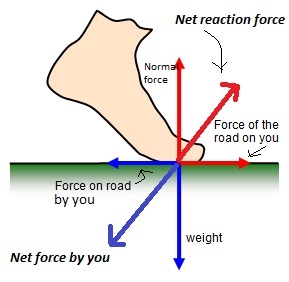
- All movement is a result of contradiction. Your foot presses on the Earth, and the Earth presses back on you.
- In other words, everything is connected, and must be analyzed in context to truly understand it. A worker isn’t just an individual, but instead part of a social class of many workers. Wages are not something invented brand new every time, but instead are set by societal standards, controlled by the ruling capitalist class.
Notable Dialectical Materialists: Karl Marx, Friedrich Engels, Rosa Luxemburg, Trotsky, Castro, Mao, Kim, Guevara, Stalin, Newton, etc.
Note: If a leftist ever "defends" a person or place you've been convinced has done terrible things, consider that it's worth analyzing what went wrong, what went right, what is truth, and what is lie to figure out how to make things better in the future. Good and Evil is an example of metaphysical analysis and doesn't point to why groups did the things they did. If ever you find yourself thinking someone did something because they are evil, proper analysis and research hasn't been done.
--
--
Historical Materialism
- Developed by Marx; This is an analysis of history based on Dialectical Materialism. This developed and explained Scientific Socialism, which is a method of achieving a communist society though the basis of altering the material conditions of society.
--
Your theoretical study does not aim at turning you into mere theoreticians, but at enabling you to work well. We study theory in order to apply it, not for its own sake and not to make capital for ourselves later to bargain with the Party — such attitudes should be extirpated. We do not carry on studies to learn by heart every sentence and every word and apply the experience of brother countries in a mechanical way. We must learn Marxism-Leninism to analyze and solve the actual issues of the revolution in our country according to its particular conditions.
Ho Chi Minh on Revolution: Selected Writings 1920-1966
Why Do We Have To Study Theory (1957)
🇻🇳
--
The Principles of Communism
Published by Friedrich Engels (1847)
Selected Works Vol 1
F.A.Q. format
--
What Is Communism?
- Communism is the doctrine of the conditions of the liberation of the proletariat
--
What is the Proletariat?
- A class in society which lives entirely from the sale of its labor and doesn't draw profit from capital. The Working Class.
- The beginning of the Proletariat class originated during the industrial revolution in England in the last half of the 18th century. Since the machines used in the industrial revolution were large and expensive, they could only be bought by capitalists, which altered the whole mode of production.
- Starting with weavers, capitalists realized they could produce cheaper and higher quality products using heavy machinery rather than hand looms and spinning wheels. This new factory system quickly spread to book printing, pottery, and metal industries.
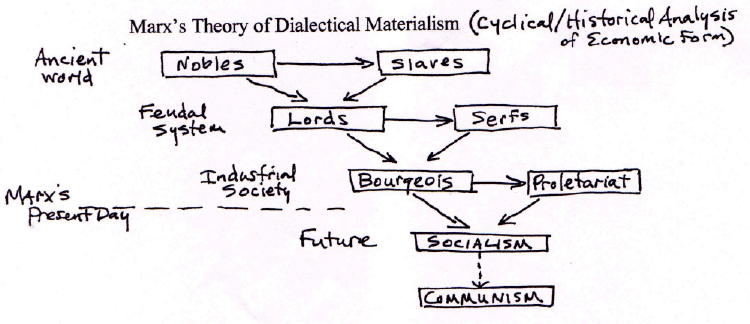
- Industrialization had ruined the old middle class and replaced it with capitalists who owned the means of production and the propertyless proletarian who operate the machinery of the capitalist to survive
--
What working classes were there before the industrial revolution?
- In Antiquity, the workers were the slaves of the owners.
- In the middle ages, they were the serfs of the land-owning nobility
--
How is the proletarian different from the slave?
- The slave is sold once and for all; the proletarian must sell himself daily and hourly.
- The slave counts as a thing, not as a member of society. Thus, the slave can have a better existence than the proletarian, while the proletarian belongs to a higher stage of social development and, himself, stands on a higher social level than the slave.
- The slave frees himself when, of all the relations of private property, he abolishes only the relation of slavery and thereby becomes a proletarian; the proletarian can free himself only by abolishing private property in general.
--
How is the Proletarian different from the serf?
- The serf possesses and uses an instrument of production, a piece of land, in exchange for which he gives up a part of his product or part of the services of his labor. The proletarian works with the instruments of production of another, for the account of this other, in exchange for a part of the product.
- The serf gives up, the proletarian receives. The serf has an assured existence, the proletarian has not. The serf is outside competition, the proletarian is in it.
- The serf liberates himself in one of three ways: either he runs away to the city and there becomes a handicraftsman; or, instead of products and services, he gives money to his lord and thereby becomes a free tenant; or he overthrows his feudal lord and himself becomes a property owner. In short, by one route or another, he gets into the owning class and enters into competition. The proletarian liberates himself by abolishing competition, private property, and all class differences.
--
What were the immediate consequences of the industrial revolution?
- First, the lower and lower prices of industrial products brought about by machine labor totally destroyed, in all countries of the world, the old system of manufacture or industry based upon hand labor.
- In this way, big industry has brought all the people of the Earth into contact with each other, has merged all local markets into one world market, has spread civilization and progress everywhere and has thus ensured that whatever happens in civilized countries will have repercussions in all other countries.
- It follows that if the workers in England or France now liberate themselves, this must set off revolution in all other countries – revolutions which, sooner or later, must accomplish the liberation of their respective working class.
- Moreover, the further this process advances, the more new labor-saving machines are invented, the greater is the pressure exercised by big industry on wages, which, as we have seen, sink to their minimum and therewith render the condition of the proletariat increasingly unbearable. The growing dissatisfaction of the proletariat thus joins with its rising power to prepare a proletarian social revolution.
--
Further Consequences of the Industrial Revolution?
- The steam engine sped up industrial production as well as cutting its costs which created a situation where more was being produced than needed
- Finished commodities couldn't be sold due to oversupply, so factories had to be closed and their owners went bankrupt, causing the workers to go without bread.
- Ever since the beginning of the 19th century, the condition of industry has constantly fluctuated between periods of prosperity and periods of crisis; nearly every five to seven years
--
What would a new social order have to be like?
- Above all, it will have to take the control of industry and of all branches of production out of the hands of mutually competing individuals, and instead institute a system in which all these branches of production are operated by society as a whole – that is, for the common account, according to a common plan, and with the participation of all members of society.
- It will, in other words, abolish competition and replace it with association.
- In fact, the abolition of private property is, doubtless, the shortest and most significant way to characterize the revolution in the whole social order which has been made necessary by the development of industry – and for this reason it is rightly advanced by communists as their main demand.
--
Was not the abolition of private property possible at an earlier time?
- Private property has not always existed.
- When, towards the end of the Middle Ages, there arose a new mode of production which could not be carried on under the then existing feudal and guild forms of property, this manufacture, which had outgrown the old property relations, created a new property form, private property.
--
Will the peaceful abolition of private property be possible?
- It would be desirable if this could happen, and the communists would certainly be the last to oppose it. Revolutions are not made intentionally and arbitrarily, but that, everywhere and always, they have been the necessary consequence of conditions which were wholly independent of the will and direction of individual parties and entire classes.
- The development of the proletariat in nearly all civilized countries has been violently suppressed, and that in this way the opponents of communism have been working toward a revolution with all their strength. If the oppressed proletariat is finally driven to revolution, then we communists will defend the interests of the proletarians with deeds as we now defend them with words.
--
Will it be possible for private property to be abolished at one stroke?
- No. In all probability, the proletarian revolution will transform existing society gradually and will be able to abolish private property only when the means of production are available in sufficient quantity.
--
What will be the course of this revolution?
- Above all, it will establish a democratic constitution, and through this, the direct or indirect dominance of the proletariat.
- Putting through measures directed against private property and ensuring the livelihood of the proletariat
- Finally, when all capital, all production, all exchange have been brought together in the hands of the nation, private property will disappear of its own accord, money will become superfluous, and production will so expand and man so change that society will be able to slough off whatever of its old economic habits may remain.
--
Will it be possible for this revolution to take place in one country alone?
- No. By creating the world market, big industry has already brought all the peoples of the Earth, and especially the civilized peoples, into such close relation with one another that none is independent of what happens to the others.
- It follows that the communist revolution will not merely be a national phenomenon but must take place simultaneously in all civilized countries – that is to say, at least in England, America, France, and Germany.
--
What will be the consequences of the ultimate disappearance of private property?
- Society will take all forces of production and means of commerce, as well as the exchange and distribution of products, out of the hands of private capitalists and will manage them in accordance with a plan based on the availability of resources and the needs of the whole society.
- The division of society into different, mutually hostile classes will then become unnecessary. Indeed, it will be not only unnecessary but intolerable in the new social order. The existence of classes originated in the division of labor, and the division of labor, as it has been known up to the present, will completely disappear.
- Education will enable young people quickly to familiarize themselves with the whole system of production and to pass from one branch of production to another in response to the needs of society or their own inclinations.
--
What will be the influence of communist society on the family?
- It will transform the relations between the sexes into a purely private matter which concerns only the persons involved and into which society has no occasion to intervene. It can do this since it does away with private property and educates children on a communal basis, and in this way removes the two bases of traditional marriage – the dependence rooted in private property, of the women on the man, and of the children on the parents.
--
What is the attitude of the communists to the other political parties of our time?
- This attitude is different in the different countries.
- In America, where a democratic constitution has already been established, the communists must make the common cause with the party which will turn this constitution against the bourgeoisie and use it in the interests of the proletariat – that is, with the agrarian National Reformers.
Karl Marx: A Brief Biographical Sketch with an Exposition of Marxism
V.I. Lenin (1914)
Warning: Dry, long, and heady document
--
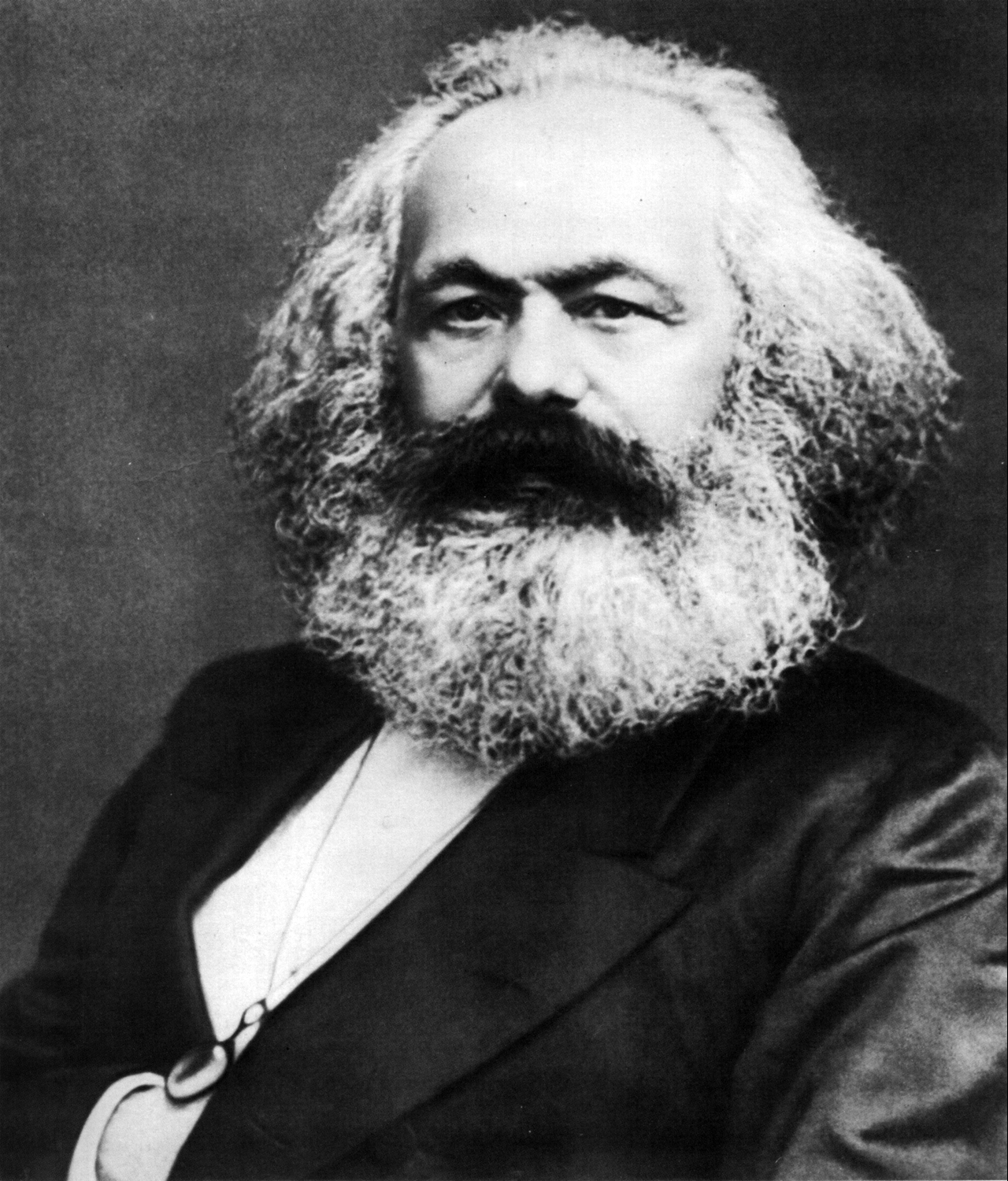
Karl Marx was Born
- May 5, 1818 in Prussia
- Went to college in Bonn and later in Berlin to study history and philosophy
- After his dreams of becoming a professor was soured, he became a writer in a paper called Rheinische Zeitung with Bruno Bauer.
- The paper was censored and suppressed and Marx moved to paris to publish another paper
- Engels came to paris and became close friends with Marx
- Marx kept getting banished for being a dangerous revolutionary everywhere he went: paris, brussels, cologne, germany as a whole, then moved to London where he lived until his death.
- Engels was a major financial aid to Marx and without his support, wouldn't have been able to finish Capital or even feed himself or his family. Some of his children died in childhood because of his destitute living circumstances
--
The Marxist Doctrine
Quote from Engels
“The great basic question of all philosophy, especially of more recent philosophy, is the relation of thinking and being... spirit to Nature... which is primary, spirit or Nature.... The answers which the philosophers gave to this question split them into two great camps. Those who asserted the primary of spirit to Nature and, therefore, in the last instance, assumed world creation in some form or other... comprised the camp of idealism. The others, who regarded Nature as primary, belonged to the various schools of materialism.”
--
Marx and Engels considered that the “old” materialism, including that of Feuerbach (and still more the “vulgar” materialism of Buchner, Vogt and Moleschott), contained the following major shortcomings:
- This materialism was “predominantly mechanical,” failing to take account of the latest developments in chemistry and biology (today it would be necessary to add: and in the electrical theory of matter).
- The old materialism was non-historical and non-dialectical (metaphysical, in the meaning of anti-dialectical), and did not adhere consistently and comprehensively to the standpoint of development.
- It regarded the “human essence” in the abstract, not as the “complex of all” (concretely and historically determined) “social relations”, and therefore merely “interpreted” the world, whereas it was a question of “changing” it, i.e., it did not understand the importance of “revolutionary practical activity”.
--
In our times, the idea of development, of evolution, has almost completely penetrated social consciousness, only in other ways, and not through Hegelian philosophy. Still, this idea, as formulated by Marx and Engels on the basis of Hegels’ philosophy, is far more comprehensive and far richer in content than the current idea of evolution is. A development that repeats, as it were, stages that have already been passed, but repeats them in a different way, on a higher basis (“the negation of the negation”), a development, so to speak, that proceeds in spirals, not in a straight line; a development by leaps, catastrophes, and revolutions; “breaks in continuity”; the transformation of quantity into quality; inner impulses towards development, imparted by the contradiction and conflict of the various forces and tendencies acting on a given body, or within a given phenomenon, or within a given society; the interdependence and the closest and indissoluble connection between all aspects of any phenomenon (history constantly revealing ever new aspects), a connection that provides a uniform, and universal process of motion, one that follows definite laws—these are some of the features of dialectics as a doctrine of development that is richer than the conventional one. (Cf. Marx’s letter to Engels of January 8, 1868, in which he ridicules Stein’s “wooden trichotomies,” which it would be absurd to confuse with materialist dialectics.)
--
Marx's Economic Doctrine
--
Socialism
--